
Start with the heat profile
Temperature, flow, operating hours, dust, cooling water, and electricity price determine whether an ORC system deserves detailed evaluation.
ENSA Neoenergy helps industrial operators in the South Caucasus identify recoverable waste heat, select the right ORC technology, and convert viable heat streams into clean on-site power.
Mission
A significant share of industrial energy is still released as unused heat. ENSA Neoenergy connects operators in Georgia and Armenia with leading European ORC manufacturers and helps move viable projects from first screening to delivery.
Temperature, flow, operating hours, dust, cooling water, and electricity price determine whether an ORC system deserves detailed evaluation.
Enogia is suited to compact and lower-temperature applications; Turboden covers heavier industrial duties and larger power blocks.
Mining farms and data centers become relevant when constant load is paired with gensets, engine exhaust, grid constraints, or higher-temperature cooling loops.
ENSA supports site visits, preliminary feasibility work, OEM communication, and project follow-through in Georgia and Armenia.
Technology partners

A benchmark name in large-scale organic Rankine cycle systems. Turboden delivers ORC units up to 20 MW, along with industrial heat pumps and gas expanders for demanding waste-heat recovery projects.
Visit Turboden
A specialist in compact turbomachinery. Enogia's ORC modules, from 10 kW to 3 MW, recover heat from lower-temperature sources in engines, geothermal, maritime, and industrial applications.
Visit EnogiaTogether, Turboden and Enogia give ENSA coverage across the practical ORC range: 10 kW to 20 MW. That means small, modular heat streams and large industrial sources can be assessed with the right technology in mind.
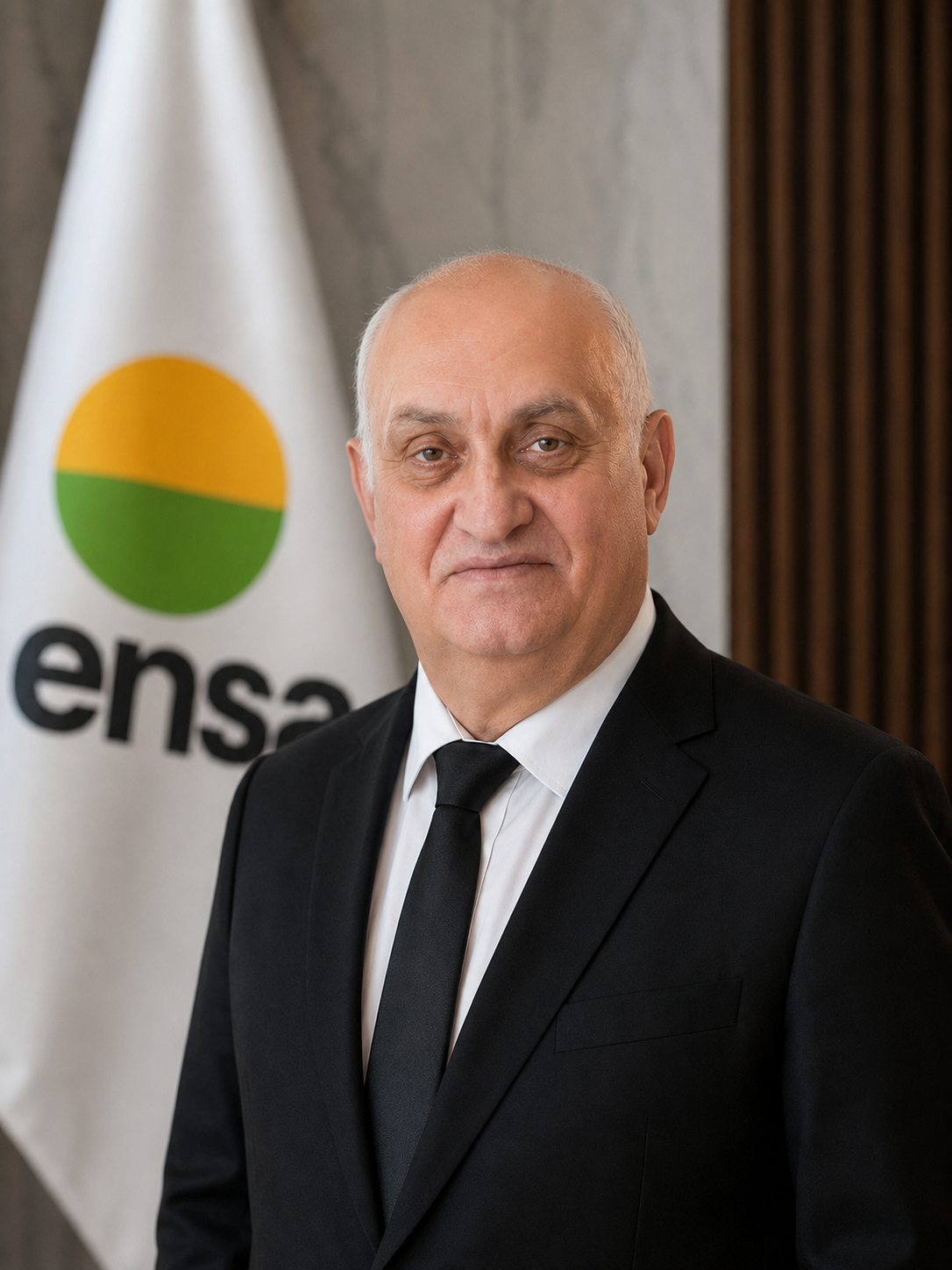
Founder
Prof. Merab Janelidze
Director, ENSA Neoenergy · Professor of Energy
Prof. Merab Janelidze brings decades of experience in the power sector. He leads ENSA's work to introduce waste heat-to-power technology across the South Caucasus, represents Turboden and Enogia in the region, and evaluates each site before any equipment is proposed.
Regional opportunity
A hydro-dominated power system, geothermal resources, and a heavy-industry base with meaningful untapped waste-heat streams.
A power system built on gas, nuclear, hydro, and fast-growing solar, with energy-intensive mining and metallurgy that can benefit from firm heat-to-power generation.
Interactive energy map
From hydro and solar potential to Rustavi's industrial and data-load corridor, the map highlights where recoverable heat and firm power demand may create viable ORC opportunities.
Contact
That is where waste heat-to-power can become commercially relevant. Share the process type, temperature, operating hours, cooling conditions, and electricity cost, and ENSA can screen whether an ORC project is worth developing.